Start with the device instruction
Apple’s current support page tells Mac-notebook users to remove keyboard covers before closing the display. It explains that the screen-to-top-case clearance is tightly engineered and added material can interfere when closed. This is relevant even when a cover’s seller lists the correct keyboard family. A molded fit and a closed-display clearance instruction answer different questions.
Do not create a thickness exception
The selected GhostCover source lists 0.12 mm and the selected Moshi record lists 0.1 mm. Neither number is used here to override Apple’s instruction. The site does not calculate a safe remaining gap, assume a thinner sheet cannot contact the display or promise that a closed laptop will be undamaged. No clearance or pressure experiment was performed.
Keep the workflow explicit
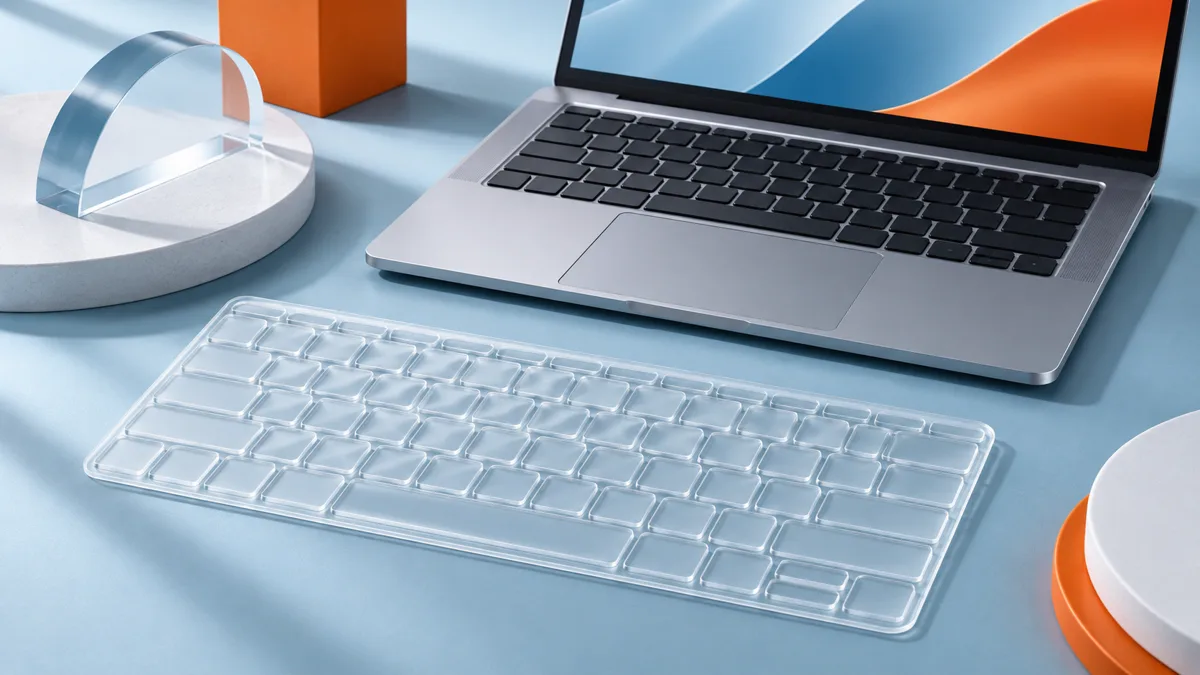
A buyer considering a cover should include removal and separate storage in the purchase decision. The generic illustrations keep protectors detached and laptops open or stored separately. They do not show a closed notebook with a cover inside. This reference has not tested how a particular person handles, transports or stores an actual device.
Do not substitute another accessory
A cloth, screen liner, palm-rest cover or camera cover has its own product conditions. Apple’s page also discusses other materials in the closing space. This guide does not recommend adding a barrier to make a keyboard cover safe to leave in place. A seller’s suggested accessory is not treated as a device-manufacturer exception.
Read the lookup correctly
A documented family reference in the tool means the selected seller variant names that keyboard family and the device identifier was checked against Apple’s list. It does not mean Apple endorses the cover or that every use condition is approved. The removal instruction remains visible for known and unknown results alike.
Before buying
Confirm the actual model, physical layout, selected cover variant and the device’s current instructions. Decide whether the removal workflow suits the intended use before comparing price. The website provides no liquid-damage, display-damage, thermal or warranty guarantee. Independent compatibility and content review remain pending beyond the limited source relationships recorded here.
Keep two decisions on the same note
A buyer can record a documented keyboard-family reference and still decide that the required removal workflow does not suit the intended use. Those are compatible conclusions. The source match answers which selected option the maker names;Apple’s instruction addresses the device when closing. Do not collapse both into one green “safe” label. The tool deliberately keeps the removal statement visible even after a known result. A seller’s description of thinness or a suggested barrier accessory does not supply a reviewed device-manufacturer exception. The purchase record should retain both the selected model/layout and the actual closing condition rather than allowing price or a fit badge to hide the latter.
Sources & scope
Checked November 4, 2026. Manufacturer and retailer references support the specific statements. Dated displayed prices are not final checkout quotes, performance rankings or performance testing. This shopping reference does not replace the exact product label or qualified individual advice. Exact current compatibility and independent content/commerce review remain pending.
Apple: remove covers before closing a Mac notebook ↗
Keep reading
Washable cover wording does not authorize washing the laptop ↗
A default sold-out label can describe a different selected variant ↗
A cover warranty is not a guarantee for the laptop beneath it ↗